Description
The Science Behind High-Polyphenol Extra Virgin Olive Oil
Extra Virgin Olive Oil is much more than a source of monounsaturated fat.
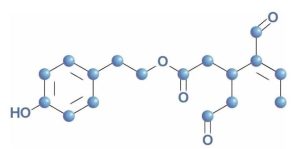
It naturally contains a complex group of phenolic compounds, including hydroxytyrosol and its derivatives, oleuropein-related compounds, oleocanthal and oleacein.
These compounds have attracted considerable scientific interest because of their antioxidant and other biological properties.
At MORFEAS ELLAS, our interest in high-polyphenol olive oil is based not on marketing claims, but on scientific research, laboratory analysis and documented composition.
AN AUTHORISED EUROPEAN HEALTH CLAIM
Olive Oil Polyphenols & Oxidative Stress
European Union legislation authorises the following health claim for olive oil polyphenols:
“Olive oil polyphenols contribute to the protection of blood lipids from oxidative stress.”
This claim may be used only for olive oil providing at least 5 mg of hydroxytyrosol and its derivatives per 20 g of olive oil.
The beneficial effect is obtained with a daily intake of 20 g of olive oil.
These conditions are established by Commission Regulation (EU) No 432/2012, as currently consolidated.
This is the principal health-related statement we use because it is specifically authorised under European Union legislation, when the relevant compositional conditions are met.

WHY POLYPHENOLS MATTER
Naturally occurring bioactive compounds
Olive oil polyphenols are naturally occurring compounds produced by the olive tree.
Among the best studied are:
Hydroxytyrosol
A phenolic compound found naturally in olive oil and one of the compounds specifically included in the authorised EU health claim.
Oleocanthal
A naturally occurring phenolic secoiridoid derivative that has been extensively studied for its biological properties.
Oleacein
Another important phenolic compound found particularly in fresh, high-phenolic extra virgin olive oils.
Oleuropein derivatives
Compounds originating from the olive fruit that contribute to the complex phenolic profile of extra virgin olive oil.
The concentration and composition of these compounds can vary considerably according to olive variety, geographical origin, harvest time, cultivation conditions, extraction and storage.

THE GREEK CONTRIBUTION TO OLIVE OIL RESEARCH
From Greek olive trees to modern analytical science
Greece has played an important role in the scientific study of olive oil phenolic compounds.
Researchers at the National and Kapodistrian University of Athens, including Professor Prokopios Magiatis, Professor of Pharmacognosy and Natural Products Chemistry, have contributed significantly to the development and application of analytical methods for olive oil phenolics.
A landmark study by Karkoula, Skantzari, Melliou and Magiatis established a method for the direct quantitative measurement of oleocanthal and oleacein in olive oil using quantitative ¹H-NMR and applied it to 175 Greek and Californian monovarietal olive oils.
This work helped demonstrate the considerable variation in the phenolic composition of different olive oils and strengthened the scientific basis for characterising high-phenolic EVOOs.

FROM CHEMISTRY TO HUMAN RESEARCH
What does the scientific literature show?
Research in humans has investigated the relationship between high-phenolic extra virgin olive oil and several physiological parameters.
For example, a randomized controlled crossover study found that consumption of high-polyphenolic EVOO improved endothelial function compared with refined olive oil in adults at increased risk for type 2 diabetes.
Another controlled human study found that high-polyphenol EVOO consumption was associated with changes in markers including oxidised LDL and total antioxidant capacity, although the overall results were not uniform across all participants.
Greek researchers have also conducted clinical studies investigating hydroxytyrosol-enriched olive oil in people with chronic coronary disease. These studies have reported promising findings in selected vascular and cardiovascular parameters, while also emphasising the need for further research.
More recently, a randomized clinical trial involving Greek researchers, including Prokopios Magiatis and Eleni Melliou, examined high-phenolic EVOO in people with hyperlipidaemia. The study compared oils with different phenolic concentrations and doses, with phenolic content determined by NMR spectroscopy.

Her research is focused on the chemistry of natural products and particularly on the isolation and structural identification of small bioactive molecules from foods. In 2011 she worked as a visiting professor in the Department of Food Science and Technology at the University of California, Davis.
She was honored as Inventor of the Year 2016 in Greece for her invention ARISTOLEO. She worked with Prof. Magiatis to create the first university lab to offer analysis of olive oil’s health protecting ingredients using nuclear magnetic resonance (NMR).
He has worked as a visiting professor at the University of California, Davis. In 2009, he was awarded the Egon-Stahl silver medal as the top scientist under 40 years old in the field of natural-products chemistry and pharmacology.
His research is focused on the isolation, chemical synthesis, and bioactivity of natural products, especially those reported in ancient medical texts. He was honored as Inventor of the Year 2016 in Greece for his invention ARISTOLEO.
He worked with Dr. Melliou to create the first university lab to offer analysis of olive oil’s health protecting ingredients using NMR
WHAT WE KNOW — AND WHAT WE DO NOT CLAIM
Science before promises
Scientific research on olive oil polyphenols is expanding rapidly.
Laboratory, experimental and clinical studies have investigated antioxidant, anti-inflammatory, vascular and metabolic effects of olive oil phenolic compounds.
However, scientific research should not be confused with a medical claim.
MORFEAS ELLAS does not present olive oil as a medicine, does not claim that it prevents or treats disease, and does not replace medical advice with nutritional information.
Our approach is simple:
We present the scientific evidence.
We document the composition.
We let the consumer make an informed choice.
SCIENTIFIC REFERENCES
European Union
Commission Regulation (EU) No 432/2012 — authorised health claim concerning olive oil polyphenols and protection of blood lipids from oxidative stress.
Karkoula E., Skantzari A., Melliou E., Magiatis P. (2012)
Direct measurement of oleocanthal and oleacein levels in olive oil by quantitative ¹H NMR. Journal of Agricultural and Food Chemistry.
Kourek C. et al. (2025)
Effects of High-Phenolic Extra Virgin Olive Oil on the Lipid Profile of Patients with Hyperlipidemia: A Randomized Clinical Trial. Nutrients.
Ikonomidis I. et al. (2023)
Association of hydroxytyrosol enriched olive oil with vascular function in chronic coronary disease. European Journal of Clinical Investigation.
Njike V.Y. et al. (2021)
Post-prandial effects of high-polyphenolic extra virgin olive oil on endothelial function. International Journal of Cardiology.
Melliou E., Magiatis P. and collaborators
Research on olive oil phenolic compounds, NMR analysis and their biological properties at the National and Kapodistrian University of Athens.